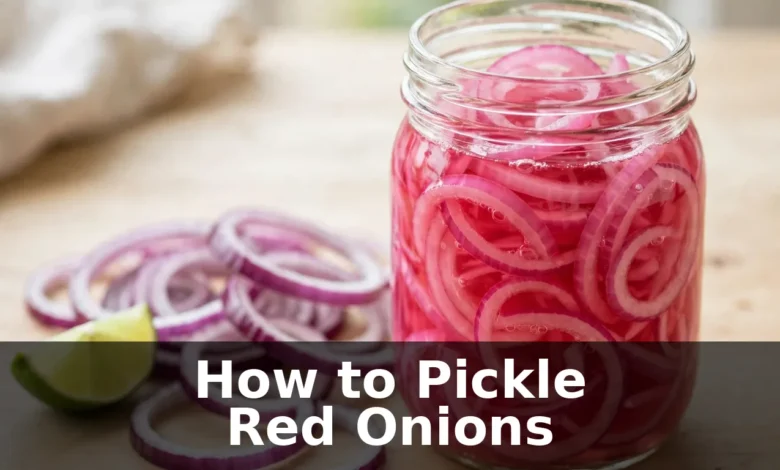
Learning how to pickle red onions is one of those small kitchen projects that pay off far beyond the effort they take. Slice a red onion thin, pour over a hot vinegar brine, and within an hour you have a jar of bright pink, tangy, slightly sweet onions that make almost anything taste better. Tacos, burgers, salads, grain bowls, grilled chicken, fried eggs — they all get a lift from a spoonful of these.
The whole thing takes about 15 minutes of hands-on work, and you do not need any special equipment or pickling experience. This is a quick pickle, not a canned preserve, which means there is no water bath, no sterilising marathon and no waiting weeks before you can eat them. You make them today, and they are ready to eat in about an hour, though they get even better after a night in the fridge.
This guide covers the basic recipe in detail, the ratios that actually work, a few flavour variations worth trying, how to store the onions so they stay crisp, and what to do when something does not turn out quite right.
What Are Pickled Red Onions?
Pickled red onions are thinly sliced red onions soaked in a flavoured vinegar brine. The acid in the vinegar does two things at once: it softens the raw bite of the onion, and it draws out the onion’s natural colour, turning the slices a vivid pink within minutes. Sugar balances the sharpness, salt rounds out the flavour, and any spices you add — peppercorns, bay leaf, garlic — give the brine its own character.
They are sometimes called quick pickled onions because the method is so fast. Unlike traditional pickles, which ferment or sit in brine for days, quick pickles rely on hot vinegar poured directly over the vegetables. The heat helps the onion absorb flavour quickly, and the jar goes straight into the fridge once it cools.
You will find pickled red onions on menus everywhere now, from taco trucks to salad bars to sandwich shops. They are popular because they do a job that few condiments can: they add acidity, crunch, colour and a little sweetness all at once, without overpowering the dish underneath.
Why Make Them at Home?
Shop-bought jars exist, but homemade pickled red onions are better in a few practical ways. First, you control the sweetness. Many store-bought versions are noticeably sugary, while a home batch lets you pull the sugar back or leave it out almost entirely. Second, you control the thickness of the slices, and thickness matters more than most recipes admit. Third, a batch costs very little — a couple of red onions, some vinegar you probably already own, and a jar.
There is also the freshness factor. A jar from the shop may have been sitting on a shelf for months. A jar you made this morning is crisp, bright and exactly as sharp or as mellow as you seasoned it. And because the recipe is so forgiving, it is a good first pickling project if you have never tried one before. If you can boil water, you can pickle red onions.
Ingredients for Quick Pickled Red Onions
This recipe makes about one pint jar, roughly two cups of pickled onions. That is enough to last a household a couple of weeks of regular use, and it scales up easily — just double everything if you want two jars.
The Onions
- 2 medium red onions (about 300–350 g total), peeled
- Slice them as thinly as you can manage, ideally 2–3 mm. A mandoline makes this easy, but a sharp knife and a steady hand work just as well. Thin slices pickle faster, stay tender rather than crunchy-raw, and layer neatly into a jar. Thick slices take longer to soften and can stay harsh in the middle.
The Brine
- 1 cup (240 ml) apple cider vinegar, or white vinegar, or a half-and-half mix
- 1 cup (240 ml) water
- 2 tablespoons sugar (granulated white sugar, or honey if you prefer)
- 1½ teaspoons fine sea salt
Optional Flavourings
These are not required, but each one changes the character of the finished onions in a pleasant way:
- 1 clove garlic, lightly smashed
- 1 teaspoon black peppercorns
- 1 bay leaf
- ½ teaspoon chilli flakes, for gentle heat
- A few sprigs of fresh thyme or a pinch of dried oregano
Apple cider vinegar gives a rounder, slightly fruity tang. White vinegar gives a sharper, cleaner bite. Rice vinegar makes a milder, softer pickle. Any of them works, so use the one you have, or the one whose flavour you like best. The one thing to avoid is a vinegar with added flavourings that clash, like malt vinegar, which tends to overpower the onion.
Equipment You Need
You do not need anything unusual:
- A clean glass jar with a tight-fitting lid, about 1 pint (500 ml) capacity
- A small saucepan
- A sharp knife and chopping board, or a mandoline
- A spoon for stirring
Glass is the right choice for the jar because vinegar is acidic and can react with some metals and stain some plastics. A mason jar, a recycled jam jar or any clean glass jar with a lid will do. Wash it with hot soapy water and rinse it well before you start. There is no need to sterilise it the way you would for canning, because these pickles live in the fridge and get eaten within a few weeks.
How to Pickle Red Onions: Step by Step
Step 1: Slice the Onions
Peel the red onions and cut off the root and stem ends. Slice them into thin rings or half-moons, about 2–3 mm thick. Half-moons pack into a jar more neatly than full rings, and they are easier to spoon out later, so cut each onion in half from root to stem first, then slice across. Try to keep the slices even — uneven slices pickle unevenly, and the thick ones will still taste raw when the thin ones are done.
Pack the sliced onions into your clean jar. They should fit snugly but not be crushed down. Leave about a centimetre of space at the top.
Step 2: Make the Brine
Put the vinegar, water, sugar and salt into a small saucepan. Add any optional flavourings you are using — garlic, peppercorns, bay leaf, chilli flakes. Stir and bring the mixture to a gentle boil over medium heat, just long enough for the sugar and salt to dissolve completely. This usually takes two or three minutes. You do not need to boil it hard or for long; once it bubbles and the sugar has disappeared, it is ready.
Step 3: Pour the Brine Over the Onions
Carefully pour the hot brine over the onions in the jar. The liquid should cover the onions completely. If a few slices float up, press them down gently with a spoon. You will notice the colour change start almost immediately — the pale purple slices begin turning pink as the hot acid hits them.
Step 4: Cool, Seal and Refrigerate
Let the jar sit on the counter until it reaches room temperature, usually 30–45 minutes. Then put the lid on and move it to the fridge. The onions are technically ready to eat after about an hour, but they taste noticeably better after a few hours, and best of all after a full night. The flavour deepens, the sharpness softens, and the colour turns a deep, even pink.
That is the whole recipe. Four steps, fifteen minutes of work, and a jar that will quietly improve half your meals for the next few weeks.
How Long Do Pickled Red Onions Take?
The honest answer depends on how patient you are. Here is a rough guide to what changes as time passes:
- 30–60 minutes: Edible, still fairly sharp, colour light pink
- 4–6 hours: Good balance, colour deepening, bite softening
- Overnight (12–24 hours): Best flavour, even deep pink colour, mellow tang
- 3–7 days: Flavour fully settled, onions tender but still with bite
- 2–3 weeks: Still good, gradually softer, colour may deepen further
If you are in a rush, you can eat them after an hour. If you can wait until tomorrow, do — the difference is real, and it costs you nothing but a little patience.
Flavour Variations Worth Trying
Once you have the basic recipe down, it is easy to change the character of the onions with small tweaks. Each of these keeps the same brine ratio, so nothing about the method changes.
Spicy Pickled Red Onions
Add a sliced fresh jalapeño or a teaspoon of chilli flakes to the brine, along with the garlic. The heat is gentle rather than fierce, and it works especially well on tacos and grilled meats.
Sweet and Mild
Increase the sugar to 3 tablespoons and use rice vinegar instead of apple cider vinegar. The result is softer, sweeter and less sharp — a good match for salads and sandwiches where you want the onion to blend in rather than stand out.
Herby and Mediterranean
Add a bay leaf, a teaspoon of dried oregano and a few black peppercorns. This version suits grain bowls, grilled vegetables and anything with feta or olives.
Lime and Coriander
Swap half the water for fresh lime juice and add a small handful of coriander seeds to the brine. It is brighter and more citrusy, and it pairs naturally with Mexican-style dishes.
No-Sugar Version
Leave the sugar out entirely and add an extra half-teaspoon of salt. The onions will be sharper and more purely tangy. Some people prefer this on rich food like pulled pork or fried chicken, where the acidity cuts through the fat and the sweetness is not needed.
A good habit is to make one small change at a time. That way, when you find a version you love, you know exactly what made it work.
How to Store Pickled Red Onions
Storage is simple, but a few details make a real difference to how long the onions stay good.
- Keep them in the fridge at all times. Quick pickles are not shelf-stable. They are not canned, and they have not been through a water bath, so they need refrigeration from the moment they cool.
- Keep the onions submerged. Onions poking above the brine dry out and lose colour. Press them down when you take some out, and top up with a little extra vinegar if the level drops.
- Use a clean fork or spoon every time. Dipping a used utensil into the jar introduces food and bacteria that shorten the life of the batch.
- Use within 2–3 weeks. They are usually at their best in the first two weeks. After three weeks they are still safe if they have been refrigerated and handled cleanly, but they gradually lose their crunch and their colour may fade.
- Trust your senses. If the brine smells off, looks cloudy in an unusual way, or the onions have gone slimy, throw the batch out and make a fresh one. It costs almost nothing, and it is not worth the risk.
Do not freeze pickled red onions. Freezing destroys their texture, and they come out limp and watery when thawed. If you have made too much, share a jar with a neighbour instead — it is the kind of thing people are genuinely pleased to receive.
What to Eat With Pickled Red Onions
This is where pickled red onions earn their place in the fridge. A spoonful adds acidity and crunch to dishes that are rich, fatty, salty or starchy. Some of the best uses:
- Tacos and burritos. The classic pairing. They cut through rich meat, cheese and sour cream and add colour to the plate.
- Burgers and sandwiches. A layer of pickled onions replaces raw onion and adds tang without the harsh bite.
- Salads. Toss them through a green salad, a bean salad or a grain salad for acidity and colour.
- Grain bowls and rice dishes. They brighten up bowls that would otherwise taste flat.
- Grilled meats and barbecue. Serve them alongside grilled chicken, steak or pulled pork.
- Eggs. Fried or scrambled eggs with pickled onions on top is a quick breakfast that tastes far better than it sounds.
- Pizza and flatbreads. Scatter a few slices over a finished pizza for a sharp, bright contrast.
- Avocado toast. The tang of the onions balances the richness of the avocado.
A useful rule of thumb: if a dish feels rich, heavy or one-note, pickled red onions will probably improve it. If a dish is already sharp and acidic, like a vinegar-based slaw, they may be too much — use a light hand.
Troubleshooting: Common Problems and Fixes
Why did my onions turn pink?
That is exactly what should happen. Red onions contain pigments called anthocyanins, which change colour in acid. The vinegar brine makes those pigments turn a bright pink. If your onions stay pale, your brine may not have been acidic enough, or the slices may have been too thick. If they turn a deep magenta, that is normal too — the colour deepens over the first day in the fridge.
Why are my onions soft instead of crisp?
A few things can cause this. Slices cut too thin — under 1 mm — go limp quickly. Boiling the brine for too long, or pouring it over the onions while it is still at a rolling boil and leaving it, can overcook them. And onions that have sat in the fridge for more than three weeks soften naturally. For the best crunch, slice at 2–3 mm, bring the brine just to a boil, and eat the batch within two weeks.
Why do my onions taste too sharp?
They probably need more time. Freshly made pickled onions are at their sharpest. After a night in the fridge, the flavours mellow considerably. If they are still too sharp after a day, your vinegar may be very strong, or the sugar may have been left out. Next time, add the full two tablespoons of sugar, or try a milder vinegar like rice vinegar.
Why do my onions taste too sweet?
The most likely cause is too much sugar, or a sweet vinegar. Halve the sugar next time, or leave it out entirely. You can also balance an over-sweet batch by adding a splash more vinegar to the jar and giving it a stir.
Why is the brine cloudy?
A little cloudiness is normal, especially if you used garlic or spices, which release particles into the liquid. It is also normal for the brine to pick up colour from the onions. What is not normal is a sour or yeasty smell, a slimy texture, or visible mould. If you see any of those, discard the jar.
Why did my onions float to the top?
Onion slices are light and naturally float. It is not a problem, but slices above the brine will not pickle evenly. Press them down with a spoon after pouring in the brine, and if they keep floating, a small clean weight — even a small ramekin that fits inside the jar — will hold them under while the jar cools.
Can I reuse the brine?
You can, once. After the onions are gone, the brine still has flavour, and you can pour it over a fresh batch of sliced onions. The second batch will be slightly less sharp than the first, so it is a good idea to bring the brine back to a boil with a splash of fresh vinegar before reusing it. After that, start fresh — the brine loses its strength and picks up too much onion flavour to be worth a third round.
Frequently Asked Questions
How long do pickled red onions last in the fridge?
About 2–3 weeks when stored in a clean, sealed glass jar in the fridge, with the onions kept submerged in the brine. They are at their best in the first two weeks, when they are still crisp and bright pink. After three weeks they gradually soften and fade, so it is best to make a fresh batch rather than stretch an old one.
Do pickled red onions need to be refrigerated?
Yes. This is a quick pickle, not a canned preserve. The onions and brine have not been processed in a water bath, so they are not shelf-stable and must be kept in the fridge from the moment they cool down. A jar left on the counter will spoil quickly, so always refrigerate it.
Can you pickle red onions without sugar?
Yes, you can leave the sugar out entirely. The onions will be sharper and more purely tangy, which some people prefer, especially on rich food like pulled pork or fried chicken. If you skip the sugar, add an extra half-teaspoon of salt to round out the flavour. The onions will still turn pink and keep for the same 2–3 weeks.
What vinegar is best for pickling red onions?
Apple cider vinegar is the most popular choice because it gives a rounder, slightly fruity tang. White vinegar gives a sharper, cleaner bite. Rice vinegar makes the mildest, softest pickle. All three work well with the same recipe, so the best choice is the one whose flavour you like most, or simply the one you already have in the cupboard. Avoid malt vinegar, which tends to overpower the onion.
Why are my pickled red onions not turning pink?
The pink colour comes from the onion’s natural pigments reacting with the acid in the vinegar. If your onions are staying pale, the slices may be too thick for the acid to reach the centre, or the brine may have been too diluted. Make sure the brine is at least half vinegar, slice the onions thinly at 2–3 mm, and pour the brine over while it is hot. The colour should start changing within minutes and deepen over the first day.
Can I eat pickled red onions straight away?
You can eat them after about an hour, once the jar has cooled and the onions have had a little time in the brine. They will be edible but still fairly sharp. For the best flavour, wait until they have spent a night in the fridge — the sharpness softens, the sweetness balances out, and the colour turns a deep, even pink.
Conclusion
Pickled red onions are a small effort with an outsized return. Fifteen minutes of work, a handful of everyday ingredients, and you have a jar of bright, tangy onions that will improve tacos, salads, sandwiches and grain bowls for the next two to three weeks. The recipe is forgiving, the variations are easy, and the most common mistakes — slices too thick, brine boiled too long, impatience — are easy to avoid once you know about them.
Make a jar this weekend. Taste it after an hour, then again tomorrow, and notice how much better it gets overnight. Once you have a jar in the fridge, you will find yourself reaching for it constantly — and wondering why you did not start making it sooner.
Read Also: Paldean Fates Card List: Full Set and Shiny Vault Guide