192.168.1.100 Router Login and Admin Setup (2026 Guide)
If you typed 192.168.1.100 into your browser hoping to reach your router’s settings, you’re in the right place — as long as your router actually uses that address. In short, 192.168.1.100 is a private IP address that some routers and modems use as the gateway to their admin panel. When it works, opening it in a browser while connected to your home network brings up a login page, and from there you can change your Wi-Fi name and password, check connected devices, and tighten up your security.
The catch is that not every router uses 192.168.1.100. Many use a different gateway address, and if yours is one of them, this page will simply refuse to load no matter how many times you refresh it. That’s normal, and it doesn’t mean anything is broken. This guide covers both cases: how to log in through 192.168.1.100 when it is your gateway, and how to find your real gateway address when it isn’t. You’ll also find the usual fixes for a page that won’t load, a password you can’t remember, and the other small headaches that tend to show up right when you want to change one simple setting.
What Is 192.168.1.100, Really?
An IP address is just a number that identifies a device on a network, the way a house number identifies a house on a street. Your home network has its own set of these numbers, separate from the public internet. Addresses that start with 192.168 are reserved for private, local networks — they only work inside your own home or office network and can’t be reached from the outside world.
Within that private range, router makers pick one address to be the gateway: the door into the router’s own settings. The most common choices are addresses ending in .1, but some routers and modems are set up to use 192.168.1.100 instead. There’s nothing special about the number itself. It’s not a website, it’s not a service you subscribe to, and typing it into a search engine instead of the browser’s address bar won’t get you anywhere. It only means something when your device is connected to a network whose router sits at that address.
That’s also why a guide, a forum post, or a sticker can’t guarantee that 192.168.1.100 is right for you. It depends entirely on how your particular router was configured — by the manufacturer, or sometimes by your internet provider. If it isn’t your gateway, the fix isn’t to keep trying harder; it’s to find out which address your router actually uses, which takes about a minute and is covered later in this guide.
One more thing worth clearing up early: 192.168.1.100 is not your public IP address, and it tells nobody on the internet anything about you. Two households on opposite sides of the world can both have a router at 192.168.1.100, and it causes no conflict at all, because each address only exists inside its own local network.
Before You Try to Log In
A failed login attempt is usually a preparation problem, not a router problem. A quick check of these four things saves most of the frustration:
Be connected to the right network. You can only reach the admin panel from a device connected to that router — over Wi-Fi or with an ethernet cable. If your phone is on mobile data, or your laptop is connected to a neighbour’s network or a VPN, 192.168.1.100 will go nowhere. Turn off your VPN temporarily if you use one, and make sure you’re on your own home Wi-Fi.
Use a regular browser. Any modern browser works — Chrome, Firefox, Edge, Safari, or another you prefer. You don’t need a special app, and for most routers a browser is the simplest route.
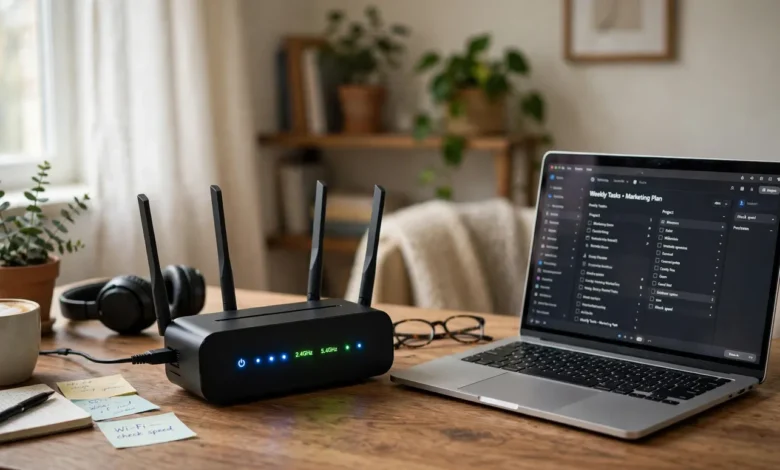
Find the label on your router. Almost every router has a sticker on the bottom or back with useful details: the default gateway address, the default Wi-Fi name and password, and sometimes the default admin username and password. That label is your best source of truth, because defaults vary by brand and model. If your router’s label says a different gateway address, use that one instead of 192.168.1.100.
Know that the Wi-Fi password and the admin password are usually different. The password you type to join the Wi-Fi gets you onto the network. The admin password gets you into the router’s settings. They are often not the same, and confusing the two is one of the most common reasons a login seems to fail.
How to Log In to Your Router Using 192.168.1.100
Here is the process, step by step. It takes a couple of minutes when everything lines up.
Step 1: Connect to your network
Connect your phone, tablet, or computer to your home Wi-Fi, or plug in an ethernet cable if your device has a port. A wired connection is slightly more reliable for this job, because it rules out Wi-Fi signal problems, but Wi-Fi works fine in most cases.
Step 2: Open your browser and type the address
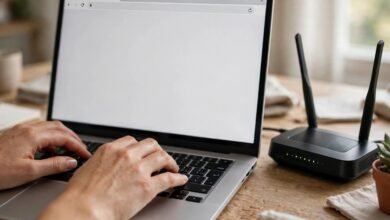
Click into the browser’s address bar — the bar at the top where website addresses go, not a search box on a search engine’s homepage — and type exactly this:
http://192.168.1.100
Then press Enter. You don’t need to add anything else, and you don’t need to type “www” in front of it. If your browser tries to turn it into a search instead, that usually means it was typed into a search field rather than the address bar.
A small note on the “http” part: your browser may warn you that the connection is “not secure” because the router’s page doesn’t use HTTPS. That’s expected for a local admin page — the traffic never leaves your home network — and it’s safe to proceed on your own router’s page. Don’t enter these credentials on any page you reached over the public internet.
Step 3: Enter the admin username and password
If 192.168.1.100 is your gateway, a login box should appear. Enter the admin username and password. Where do you find them?
- First, check the sticker on the router itself. Many routers print the default admin details there.
- If you or someone in your household changed them at some point, use the changed ones — the defaults on the sticker will no longer work.
- If your router came from your internet provider, the provider may have set its own admin details, and they may be printed on a card that came with the router or in the provider’s app or account pages.
Defaults vary a lot between brands, so this guide deliberately doesn’t list a single “standard” username and password — any list like that would be wrong for plenty of readers. Your router’s label is the reliable source. If the label is worn off or missing, the manufacturer’s support pages for your exact model are the next place to look.
Step 4: You should now see the admin panel
A successful login opens the router’s admin panel, sometimes called the dashboard, control panel, or web interface. The layout differs from one brand to another, but the sections are usually recognisable: wireless or Wi-Fi settings, network or LAN settings, security, connected devices, and system or administration. Don’t worry if it looks plain or dated — router interfaces rarely win design awards, and that’s fine. What matters is that you’re in.
If no login page appears at all, don’t keep guessing passwords. Jump to the troubleshooting section below first, because the problem is almost certainly the address, the connection, or a typo — not the password.
Inside the Admin Panel: The Settings Most People Actually Need
Router panels are full of advanced options you will probably never touch, and that’s fine. Most visits to the admin panel are for one of a handful of jobs. Here’s how to handle the common ones, wherever your particular panel puts them.
Change your Wi-Fi name (SSID) and password
Look for a section labelled Wireless, Wi-Fi, or WLAN. You’ll usually find the network name (SSID) and the password (sometimes called the network key, wireless password, or pre-shared key) in the main wireless settings or in a security sub-section.
A few practical tips:
- Pick a Wi-Fi password that is long and not obvious — a phrase you can remember beats a short string of random characters you’ll have to look up every time a guest visits.
- After you save a new Wi-Fi name or password, every device on the network will disconnect and need to reconnect with the new details. That’s expected, so do this when nobody is in the middle of a video call.
- Changing the Wi-Fi password does not change the admin password. They’re separate, and changing one leaves the other untouched.
Change the admin password
This one is genuinely worth doing, and it’s often overlooked. The admin password protects the settings themselves. If it’s still the factory default, anyone on your network who knows the default could open the panel. Look for Administration, System, or Management settings, and set the admin password to something different from your Wi-Fi password. Write it down somewhere safe — if you forget it, recovery usually means resetting the whole router, which wipes all your settings.
Check who’s connected to your network
Most panels have a section showing connected or attached devices, sometimes under Status, Clients, or DHCP. A quick look here tells you whether an unfamiliar device is using your network. Don’t panic if you see names you don’t recognise at first glance — smart TVs, speakers, printers, and phones often show up with cryptic manufacturer names. The time to act is if you see a device you truly can’t account for after checking your own gadgets, in which case changing the Wi-Fi password will cut it off.
Update the firmware
Firmware is the router’s internal software. Manufacturers release updates that fix bugs and security issues, and many routers can check for them from an Administration or Firmware Update section. Some routers update automatically. If yours offers a manual check, it’s worth running occasionally — just don’t unplug the router while an update is in progress, as interrupting it can cause real problems.
Consider a guest network
If your router offers a guest network, it’s a handy feature: guests get internet access on a separate network name, without access to your main network’s devices like shared drives or printers. It’s optional, but it’s a neat, low-effort security improvement if you have visitors often.
How to Find Your Actual Gateway Address
If 192.168.1.100 doesn’t load anything, the most likely explanation is simply that your router uses a different gateway. Finding the real one is quick, and it works no matter which address your router uses.
On Windows
Open Command Prompt (search for “cmd” in the Start menu), type ipconfig, and press Enter. Look for the “Default Gateway” line under your active connection — Wi-Fi or ethernet, whichever you’re using. That number is your router’s address. Type it into your browser’s address bar the same way.
On macOS
Open System Settings, go to Network, select your active connection (Wi-Fi or ethernet), and look for the router address, which is usually shown in the connection details. On older macOS versions, the same information appears in System Preferences under Network, in the advanced TCP/IP settings.
On a phone or tablet
On an iPhone, go to Settings, then Wi-Fi, tap the small information icon next to your connected network, and look for the Router field. On Android, the exact path varies by phone maker, but it’s usually under Settings, then Network or Wi-Fi, then your connected network’s details, where it’s shown as Gateway or Router. Either way, the number you find there is the address to type into your browser.
On Linux
Open a terminal and run ip route — the address shown after “default via” is your gateway.
Whichever method you use, if the number you find is not 192.168.1.100, that’s your answer: your router simply doesn’t live at that address, and the number you found is the one to use from now on. Bookmark it, or note it on the router’s label for next time.
192.168.1.100 Not Working? Troubleshooting
Work through these in order. Most login failures are fixed by one of the first few.
1. Check for typos — including the letter “l” problem
This is the single most common cause. The address is made of digits and dots only: 192.168.1.100. People often accidentally type the letter “l” instead of the digit “1” (192.168.l.100), add an extra dot, miss a dot, or add a space. Type it slowly, digit by digit, into the address bar. Also, don’t add “.com” or anything else to the end — it’s an address, not a website name.
2. Make sure you’re on the right network
If you’re on mobile data, a VPN, a work network, or a neighbour’s Wi-Fi, the address can’t resolve. Disconnect the VPN, switch to your own Wi-Fi, and try again. If you’re testing from a phone, temporarily turning off mobile data can help confirm the phone is actually using the Wi-Fi.
3. Try a different browser, or a private window
Occasionally a browser cache or an extension interferes with a local page. Try a private or incognito window first — it’s the quickest test — and if that works, clearing the cache for that site usually fixes the normal window too. Trying a different browser entirely is another easy way to rule the browser out.
4. Restart the router
Unplug the router’s power cable, wait about thirty seconds, plug it back in, and give it a minute or two to fully start up before trying again. This fixes a surprising number of odd behaviours, including admin pages that have stopped responding, and it’s harmless to try.
5. Try a wired connection
If you’re on Wi-Fi and the page won’t load, an ethernet cable removes signal strength and interference from the equation. If the page loads over a cable but not over Wi-Fi, the issue is with the wireless side of things, not the address.
6. Check whether the router is actually on and working
It sounds obvious, but a router with no lights, or one that’s stuck mid-startup, won’t serve any page. Confirm the power light and the internet light are behaving normally, and that your other devices can get online through it. If nothing can get online at all, the problem is the connection itself, and your internet provider’s support is the right next step.
7. Confirm the address really is your gateway
Go back to the steps in the previous section and check your device’s default gateway. If it shows a different address, use that one — 192.168.1.100 was simply never your router’s address, and no amount of retrying will change that.
Common Login Problems After the Page Loads
Getting the page to appear is only half the battle. Here’s what to do about the problems that show up next.
“I don’t know the username and password”
Start with the router’s label. If the defaults there don’t work, someone changed them — and there’s no way to recover a changed admin password from the login page itself. That’s by design; otherwise the password would be pointless. Your remaining option is a factory reset (below), which restores the defaults along with everything else.
“The password worked yesterday but not today”
Either the password was changed, or you’re logging into a different device than you think — for example, a range extender or a second router on the same network can have its own login page at a similar address. Double-check you’re on the right network and using the right address, and check with anyone else in the household who might have changed it.
“The page loads but the login just loops back”
This usually points to a browser issue: try a private window, clear the cache, or try another browser. If the loop happens in every browser, restart the router and try again.
“Connection refused” or a blank page
“Connection refused” generally means something is at that address but isn’t serving a web page — for instance, another device on your network happens to hold 192.168.1.100 and isn’t a router at all. In that case, check your actual gateway address as described above. A blank page after a long wait, on the other hand, often means the router’s web interface has stalled, and a restart usually clears it.
“My internet provider locked the admin panel”
Some provider-supplied routers restrict or replace the standard admin login, and in some cases the provider manages settings through its own app instead. If your provider’s documentation says so, that’s not a fault with your approach — use the provider’s app or account pages for the settings you need, and contact their support if a setting you want isn’t available there.
The last resort: factory reset
Nearly every router has a small reset button, usually recessed so it needs a pin or paperclip, and holding it for around ten seconds (check your router’s own documentation for the exact time) restores factory settings. This is a genuine last resort, not a casual fix: it wipes your Wi-Fi name and password, any custom settings, and the admin password, returning everything to the defaults on the label. Only do it when you’ve run out of other options, and be ready to set the router up again afterwards.
A Few Security Habits Worth Keeping
You don’t need to become a network expert to keep a home network reasonably safe. A handful of habits cover most of the risk:
- Change the admin password from the default, and keep it different from the Wi-Fi password.
- Use a strong Wi-Fi password and a modern security mode — your wireless security settings will typically offer options with names like WPA2 or WPA3, and the newer option is the better choice when your devices support it. Avoid the older WEP option if it’s still listed; it’s long outdated.
- Turn off remote management if you see it enabled and you don’t use it. It allows the admin panel to be reached from outside your home network, which most households never need.
- Keep the firmware updated, as covered above.
- Don’t share the admin password casually. Guests need the Wi-Fi password, not access to the settings.
None of this requires constant attention. Set it once, note the passwords somewhere safe, and revisit it only when something changes — a new router, a new provider, or a device you can’t account for on the network.
Frequently Asked Questions
Is 192.168.1.100 a public website I can visit from anywhere?
No. It’s a private address that only works on a local network whose router uses it as its gateway. From outside that network — on mobile data, at a café, or in another home — typing it does nothing useful. It isn’t a site you can browse to over the internet.
What should I do if 192.168.1.100 doesn’t open my router’s login page?
First, check for typos and confirm you’re connected to your own network without a VPN. Then find your actual gateway address using the steps in this guide — on most devices it takes under a minute — and try that address instead. If the correct gateway still doesn’t load, restart the router and try a different browser.
What is the default username and password for 192.168.1.100?
There isn’t a single universal default, because it depends on the router’s brand and model, and on whether your internet provider changed it. Check the sticker on the router first; that’s where the defaults for your specific device are printed. If they’ve been changed and forgotten, a factory reset restores them, at the cost of wiping your other settings.
Can I use 192.168.1.100 on my phone?
Yes. As long as your phone is connected to the same Wi-Fi network, open its browser, type the address into the address bar, and log in the same way you would on a computer. Some router interfaces are awkward on small screens, but they work. If your provider offers an app for managing the router, that’s sometimes easier on a phone — but the browser method works on any device.
Why does my browser say “not secure” on the router login page?
Because the router’s local page typically doesn’t use HTTPS, the browser flags the connection. On your own home network, reaching your own router’s local page, this is normal and expected — the connection never leaves your house. It’s a different situation from a “not secure” warning on a public website, where you should be more cautious.
Will changing settings through 192.168.1.100 affect my internet speed?
Not directly. Changing the Wi-Fi name or password has no effect on speed. Some settings in the panel can influence performance — for example, switching wireless channels in a crowded area can sometimes help — but simply logging in and changing names and passwords won’t slow anything down. If your connection slows after a change, undoing that change or restarting the router usually puts things right.
Conclusion
192.168.1.100 is a straightforward tool once you know what it is: a private gateway address that some routers use for their admin panel, and nothing more mysterious than that. If it’s your router’s address, logging in takes a couple of minutes — type it into the address bar while connected to your network, sign in with the admin details from the router’s label, and you’re in. If it isn’t your router’s address, that’s not a failure either; finding your real gateway takes about a minute, and everything in this guide applies exactly the same way from there.
The two things most worth doing once you’re inside are also the simplest: set a strong, unique admin password, and keep your Wi-Fi password strong and private. Beyond that, the panel is there whenever you need it — a new device to check, a guest network to set up, a password to change — and now you know how to reach it, and what to do when it doesn’t answer on the first try.
Read Also: Cómo Reducir Gastos Mensuales: Guía Práctica De Ahorro