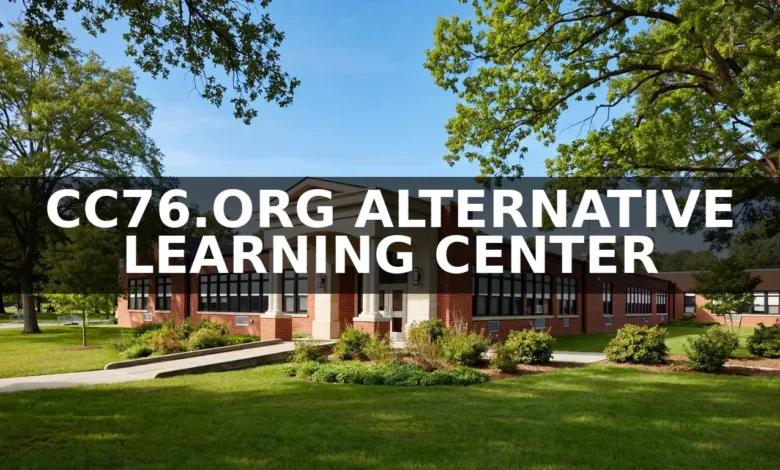
If you searched for “cc76.org alternative learning center,” you probably have a simple question: does Creve Coeur School District 76 run an alternative learning center, and how do you get your child into it?
Here is the straight answer. The district’s website, cc76.org, does not appear to run a program literally called an “Alternative Learning Center.” That phrase is what many parents type into Google when they are looking for a different kind of schooling for their child. This guide explains what cc76.org actually offers, what alternative learning centers are, and where local families can find real options when looking for a cc76.org alternative learning center.
Table of Contents
- What Is Cc76.org?
- The Direct Answer on the Cc76.org Alternative Learning Center
- What Is an Alternative Learning Center?
- What Support Does CCSD 76 Actually Provide?
- How Parents Can Ask the District About Alternative Placements
- Real Alternatives Families Can Explore
- How to Choose the Right Option
- Common Mistakes to Avoid
- Frequently Asked Questions
- Conclusion
What Is Cc76.org?
Cc76.org is the official website of Creve Coeur School District 76, a public school district based in Creve Coeur, Illinois. It is where the district posts information for families: school news, calendars, board meetings, enrollment, and descriptions of its services. Families searching for a cc76.org alternative learning center often start here.
The district serves its local attendance area as part of Illinois public education, following state law and Illinois State Board of Education guidance, including the rules governing special education. If your child attends a district school, or you are thinking about enrolling them, the website is a reasonable first stop. It cannot diagnose your child’s needs — those answers come from evaluations and conversations with real people.
The Direct Answer on the Cc76.org Alternative Learning Center
To be clear: based on what the district publishes on cc76.org, Creve Coeur School District 76 does not appear to operate a program literally named an “Alternative Learning Center.”
That does not mean the district offers nothing for students who struggle in a traditional classroom. It means the help it offers goes by different names, so a search for a cc76.org alternative learning center will not find a program under that exact name. In public education, support for students with learning differences, disabilities, or behavioral challenges is usually called special education, delivered through individualized plans.
Why does the phrase show up in searches, then? Because “alternative learning center” is a broad, everyday term. Parents use it to mean almost any schooling arrangement different from the standard classroom: a smaller setting, a slower pace, extra support, credit recovery, or a program for students who have fallen behind. You are not in the wrong place. You are just using a phrase the district itself does not use.
What Is an Alternative Learning Center?
An alternative learning center is generally a school or program designed for students who do not thrive in a traditional classroom. The details vary, but the idea is consistent: a different structure, pace, or kind of support for students whose needs the regular program does not meet. That is why the phrase cc76.org alternative learning center is searched so often.
Some are separate schools; others are programs inside a regular school building. Some focus on credit recovery, others on students who need a smaller, quieter environment or learn better through hands-on work.
Who usually attends one? Common situations include students behind on credits, students with disabilities better served in a smaller setting, students dealing with anxiety in a large, busy school, and students who need more individual attention than a class of twenty-five can provide.
It is important to understand that “alternative” does not mean “lesser.” A good alternative program is not a punishment or a dead end. It is a different route to the same destination: a solid education, a diploma, and the skills a young person needs for adult life. The best programs have clear expectations, caring staff, and a real plan for each student. In Illinois, state rules govern alternative placements, and federal law protects students with disabilities.
What Support Does CCSD 76 Actually Provide?
According to cc76.org, the district provides special education services — the main channel through which students with additional needs get support, and the main answer for families asking about a cc76.org alternative learning center.
Those services are built around a simple idea: every child with a disability is entitled to a free appropriate public education in the least restrictive environment. Federal law requires the district to provide an appropriate education at no cost to the family, in a setting that keeps the child learning alongside peers as much as appropriate. It is a legal obligation, not a favor.
In practice, that starts with an individualized education program, or IEP: a written plan, developed with the parents, spelling out what a child needs — present performance levels, annual goals, services the district will provide, and how progress will be measured. The plan is reviewed at least once a year, and for many families it is the most important document in their child’s education.
The disability categories the district works with follow the guidance of the Illinois State Board of Education. They cover needs from specific learning disabilities and speech or language impairments to autism, emotional disabilities, and other health impairments. If you believe your child may have a disability that affects their learning, you can ask the district in writing for an evaluation, which starts a formal process with timelines the district must follow.
Districts also typically provide related services such as speech, occupational, and physical therapy and counseling, in the regular classroom or a resource room, as the IEP team decides.
How Parents Can Ask the District About Alternative Placements
Start by writing down what you are seeing. Before you call or email anyone, make a short list: what is your child struggling with, when did it start, what have you already tried, and what does your child say about school? Teachers respond much better to specific observations than to general worry. “My daughter cries every morning before school and her reading scores have dropped two levels since September” is far more useful than “school is not working.” This helps whether you are asking about a cc76.org alternative learning center or any other support.
Next, contact the district office and ask to speak with the person who handles special education or student services. Explain briefly what is happening and ask how to request an evaluation or a meeting. You do not need to use legal language. A plain description of the problem is enough to start the process.
If you believe your child may have a disability, put your request for an evaluation in writing. An email is fine, and a letter is fine too. Keep a copy. A written request creates a clear record and starts the clock on the district’s obligation to respond. Describe your concerns, ask for a full evaluation, and ask what the next steps are.
Before the meeting where the team discusses the results, gather your notes and any outside reports, such as a private evaluation or a doctor’s note. Think about what you want for your child, not just what you want to avoid. You are an equal member of the IEP team, not a bystander.
If the team agrees your child needs a different setting, it may discuss a smaller classroom, a specialized program, or a placement outside the district. Whatever is proposed, ask what a typical day will look like, how progress will be measured, and what happens if it is not working. If the answers are vague, ask for specifics.
If you disagree with what the district proposes, you can ask for another meeting, request mediation, or seek a formal hearing. Keep records of everything: save emails, note the date and name of everyone you speak with, and keep copies of evaluations and IEPs in one folder.
Real Alternatives Families Can Explore
Sometimes the district’s services are enough; sometimes they are not. When that happens, families in Illinois have other kinds of options beyond a cc76.org alternative learning center. The list below describes types of options, not specific schools, because naming a particular school without verifying it is suitable for your child would be misleading. Verify every detail directly with the program first.
Homeschool co-ops are one option. In a co-op, homeschooling families share teaching, activities, and sometimes facilities. Co-ops vary enormously in size, structure, and cost, and they require a significant time commitment from parents. If you explore this route, ask how the co-op handles students with special needs and what the weekly commitment and cost look like.
Online and virtual programs are another growing category, ranging from full-time virtual public schools to part-time online courses that supplement a regular school day. For some students, learning from home removes the stress of a busy building; for others, the lack of face-to-face interaction makes things worse. Before choosing one, ask whether it is accredited, whether it provides special education services, and what a typical week looks like. A program of mostly recorded videos is very different from one with daily contact with a real teacher.
Credit-recovery and alternative high school programs serve older students who have fallen behind on credits or left school and want to return. They usually offer a flexible schedule, smaller classes, and a focus on earning needed credits. Some are run by public school districts, some by regional offices of education, and some by private organizations. A program that promises a quick diploma with almost no work deserves skepticism.
Tutoring and learning centers are a lighter-touch option. A tutor can help a child catch up in a specific subject without changing schools. This can be a good first step when the problem is narrow, such as one subject. It is usually not enough when the problem is the whole school experience.
Private schools with a focus on learning differences are another possibility for families who can consider it. Some private schools specialize in students with dyslexia, attention difficulties, or other specific needs. These schools charge tuition and follow different rules than public schools, so research carefully: ask about class sizes, teacher qualifications, and how they handle IEPs.
Whatever route you explore, visit the program if you can, talk to staff and other parents, and ask how progress is measured and what it costs, including hidden fees. Above all, listen to your child: a program that looks perfect on paper and feels wrong to the student rarely works out well.
How to Choose the Right Option
Start with your child, not with the program. What does your child need most right now? Smaller classes, more structure, extra help, or a break from a harmful situation? The answer narrows the field fast, and it is the best way to judge a cc76.org alternative learning center or any other option.
Next, be honest about what your family can sustain. A co-op needing ten hours a week from a parent is not realistic where both parents work full time, and a private school with high tuition is not realistic without a plan to pay for it. The best option is the one your family can actually carry out, day after day.
Then look at evidence: ask every program how many students finish, how progress is tracked, and how they handle problems. Vague promises are not evidence; specific answers and honest admissions about limitations are.
Involve your child in the decision to the extent their age allows. A teenager who chose a program is far more likely to stick with it. Finally, remember a decision is not forever: many families try more than one arrangement before finding the right fit.
Common Mistakes to Avoid
The first mistake is waiting too long. Many parents hope the problem will resolve itself, and sometimes it does. But if a child has been struggling for months, grades are falling, or they dread school, waiting another semester rarely helps. Early help is usually more effective than late help.
The second is chasing the name instead of the need. The name is not what matters — whether a program gives your child what they need is. A special education classroom with a great teacher and a solid IEP can beat a separate school with a grand name and weak teaching. Judge programs by what they do, not by what they are called, including any cc76.org alternative learning center you come across.
The third is accepting a placement without understanding it. If the district or a program proposes a change, ask for the details in writing: what will the day look like, who will teach your child, and how will you know whether it is working? A placement you do not understand is one you cannot monitor.
The fourth is going it alone. Other parents, advocacy groups, and parent training centers in Illinois can help you understand the process and your rights, often at no cost.
The fifth is forgetting the rest of your child’s life. A child who is struggling at school also needs sleep, play, friends, and time with family. A program that fixes the academics but leaves a child isolated and unhappy has not solved the problem.
Frequently Asked Questions
These are the questions families most often ask about a cc76.org alternative learning center.
Does Creve Coeur School District 76 have an alternative learning center?
Based on what the district publishes on cc76.org, it does not appear to run a program literally called an “Alternative Learning Center.” It does provide special education services, including individualized education programs, which are the main way it supports students who need a different kind of help.
What is cc76.org?
Cc76.org is the official website of Creve Coeur School District 76, a public school district in Creve Coeur, Illinois. It is where the district posts information for families, including details about its schools and services. For specific questions, a direct conversation with the district office is usually fastest.
What is an alternative learning center?
An alternative learning center is generally a school or program designed for students who do not thrive in a traditional classroom. It may offer smaller classes, a different pace, credit recovery, or extra support for students with behavioral or learning challenges. Some are separate schools, some are programs inside a regular school, and some are part-time options.
How do I ask the district for help for my child?
Contact the district office and ask to speak with the person who handles special education or student services. Describe what you are seeing in plain language. If you believe your child may have a disability, put a request for an evaluation in writing, by email or letter, and keep a copy. The district must follow a formal process once it receives that request.
Can my child get an IEP through CCSD 76?
If an evaluation shows that your child has a disability that affects their learning and needs specially designed instruction, the district will develop an individualized education program, or IEP. The IEP is a written plan, created with the parents, setting out goals, services, and how progress will be measured. The process starts with an evaluation, so if you have concerns, requesting one is the first step.
What if the district’s services are not enough for my child?
You have other options to explore, including homeschool co-ops, online or virtual programs, credit-recovery and alternative high school programs, tutoring, and private schools that specialize in learning differences. Before choosing any of them, verify the details directly with the program, visit if you can, and talk to other families.
Conclusion
Searching for “cc76.org alternative learning center” makes sense when your child needs something different from the standard classroom. The honest answer is that the district does not appear to run a program under that exact name — but it does run a special education system built around individualized plans, evaluations, and related services, and for many families that is the right place to start.
The key is to describe what your child needs — smaller classes, extra help, a different pace, a quieter setting — rather than asking for a cc76.org alternative learning center by name. Ask for an evaluation if a disability may be involved, keep records, and remember you are an equal partner in every decision.
And if the district’s services turn out not to be enough, you are not out of options: homeschool co-ops, online programs, credit-recovery programs, tutoring, and specialized private schools each can be the right answer for the right child. Start with a call to the district and put your concerns in writing.
Read Also: Best Pokemon Squad in Fire Red: Top Team Builds for 2026