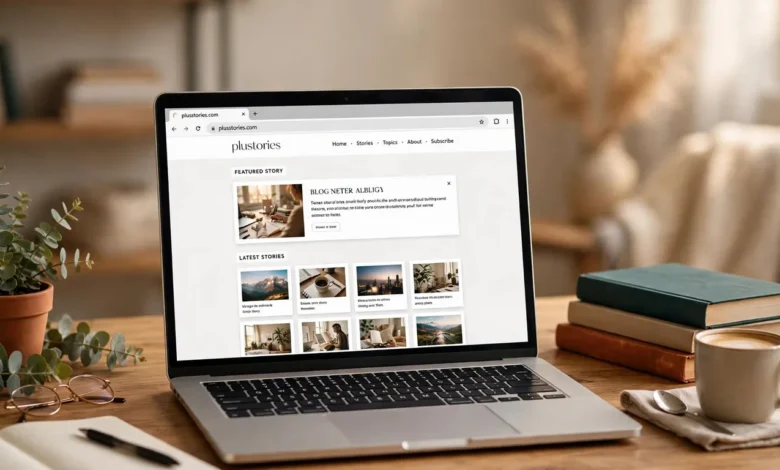
A domain name like plusstories.com makes a promise before you even click it. Stories. Plural. It sounds like a place where people publish narratives, where something is always being told. But when you actually type plusstories.com into your browser, what do you find? A storytelling platform where anyone can write? A news site? A personal blog with an ambitious name?
I went through the live site page by page to find out, and the answer is simpler — and also stranger — than the name suggests. PlusStories.com is a multi-topic blog that publishes everything from Hindi festival guides to CBSE chapter summaries, celebrity net worth profiles to street food roundups. Some of it is genuinely useful. Some of it is clearly written to catch search traffic. And a few things about the site are honestly hard to verify, which I will tell you about as we go.
This guide breaks it all down: what PlusStories.com is, what it actually publishes, how to use it, whether it is legit and trustworthy, who should bother reading it, and what your alternatives are if it does not suit you.
What Is PlusStories.com?
At its core, PlusStories.com is an online blog and content-publishing website. Its own tagline describes it as a place to “Discover Stories, Tips & Trending Content,” and that is a fair summary of what is actually there. The site is built like a classic WordPress-style magazine: a homepage with featured posts, category sections, a search box, dates and bylines on every article, and a newsletter signup box called “Briefing on Plusstories.com” that promises the day’s essential stories in your inbox every weekday morning.
Here is what it is not, at least as far as I could observe: it is not a storytelling platform where users can sign up and publish their own stories, despite what some third-party write-ups claim. I found no registration page, no contributor dashboard, and no submission guidelines on the live site. If there is a way for the public to publish on PlusStories.com, it is not advertised anywhere obvious. The content is produced by the site’s own authors and contributors.
The site publishes in two languages — English and Hindi. That is a deliberate and noticeable part of its identity. Festival content, wishes, and family stories appear in Hindi, while explainers, guides, and news-style pieces are mostly in English. The audience this serves is fairly clear: Indian readers looking for practical, easy-to-read content on everyday topics.
One thing worth being upfront about: the site does not have an About page that I could find. The address plusstories.com/about/ simply loads the homepage. There is no publicly visible statement of who runs the site, where the company is based, or who the editorial team is. Some articles carry full bylines, such as Shivi Hyde and Devin Haney, while others are credited to a generic handle like plusstories_8ejf5j. This lack of transparency is not unusual for small independent blogs, but it is worth knowing, because it matters when we talk about trust.
What Does PlusStories.com Publish?
The short answer is: a little bit of everything. The site’s category list reads like a small newspaper’s desk structure. Here are the main sections I found on the live site: Blog, Business, Education, Finance, Health, Law, Technology, Travel, Pets, AI, Online Game, Latest News, and Uncategorized.
Let us walk through the content types, because the mix is what really defines the site.
Festival and lifestyle content. This is some of the most consistent publishing on the site. Around October 2026, the homepage featured pieces like “Navratri Colour 2026: Full 9-Day Colour List, Saree Ideas & What to Wear Each Day,” “Diwali 2026 Rangoli Designs: 12 Easy & Small Ideas for Beginners,” “दिवाली की हार्दिक शुभकामनाएं 2026” (Diwali wishes and quotes in Hindi), and “करवा चौथ 2026: तारीख, पूजा मुहूर्त, चंद्रोदय समय, कथा और व्रत विधि.” Seasonal, practical, and clearly aimed at Indian readers preparing for festivals. This is the kind of content that does well on WhatsApp shares and Google Discover.
City guides and food writing. “Best Street Food in Chandni Chowk, Delhi (with Prices & Timings)” and “Moolchand Ke Parathe: Delhi’s Legendary Paratha Spot” show a food-and-travel streak. These are the most magazine-like pieces on the site — experiential, opinionated, and written with a real voice.
Celebrity and biography profiles. Posts like “Nischay Malhan (Triggered Insaan): Age, Education, Family, Wife Ruchika, and Net Worth in 2026” and “Tukaram Mundhe: The Story of an Honest and Fearless IAS Officer” follow the popular biography-profile format. The celebrity pieces in particular sit in the high-traffic, high-competition corner of search, which tells you the site is chasing trending queries.
Education and study help. “The Fun They Had Summary – CBSE Class 9 English Chapter Explained” and “Gap Year Stories: How Time Off Can Boost Your Career” target students directly. The CBSE summary format is a classic Indian education-search play, and it suggests the site wants to be a study resource, not just entertainment.
Technology and AI explainers. Pieces such as “AI vs Human Brain – What’s the Difference?”, “Understanding AI Hallucinations: Why AI Makes Things Up,” and “The Ultimate List of Free Online Storage Services for Personal Use” cover beginner-friendly tech topics. These are straightforward explainers rather than deep technical analysis.
Finance and business guides. “How to Write a Business Plan for Investors,” “Hidden Costs of Buying a Home You Should Know,” and “How to Manage Cash Flow as a Freelancer” aim at small business owners and freelancers. Worth noting: a few posts in the Business section read like sponsored or advertorial content — for example, pieces promoting YouTube video promotion services and plumber repair services. They are not clearly labeled as sponsored, which is something a careful reader should keep in mind.
Utility posts. “Free Everyday Calculators: Age, Percentage, Tip & Days-Between-Dates Explained” is a good example of the site’s practical streak — small tools and quick answers for everyday questions.
Travel and odd corners. “Self-Drive or Guided Tour in Iceland? What Works Best for Indians?” and “Luggage Storage Boston: Smart Travel Tips” sit next to “Moving to Cincinnati in 2026” and “6 Modern Slot Games That Put a Fresh Spin on Classic Features.” The variety is wide, and not every piece will be relevant to every reader. That is the nature of a general-interest blog.
How to Use PlusStories.com
Using PlusStories.com is as simple as it gets, which is part of its appeal. There is no account to create, no subscription fee to read articles, and no paywall that I encountered. You open the homepage, scroll through the latest posts, and click whatever interests you.
The site is organized by category, so if you only care about one topic — say, technology or travel — you can browse that section directly. There is also a search box in the header, which is the fastest way to find something specific. Each article shows its publication date, which is genuinely useful: the site publishes regularly, and I saw posts dated as recently as October 19, 2026, so the homepage does not feel stale.
If you want the content to come to you, there is the email newsletter signup, “Briefing on Plusstories.com,” which offers a daily roundup of the site’s stories every weekday morning. I did not subscribe during my research, so I cannot report on the email quality, but the signup itself is free and low-commitment.
One practical tip: because the site publishes in both English and Hindi, the search function is worth using with Hindi terms if that is your preference — the Hindi articles have Hindi titles, so they will not always surface if you search in English.
Is PlusStories.com Legit and Trustworthy?
This is the question that brings most people here, so let us answer it honestly instead of with a flat yes or no.
What checks out. The domain loads reliably over HTTPS. The site publishes fresh content on a regular schedule — there were posts from October 19, 2026, just days before this article was written, which is a good sign of an actively maintained site rather than an abandoned or parked domain. Reading is completely free, and nothing on the site asked me for payment details, login credentials, or personal information just to browse. The content itself is readable and mostly practical: festival dates, study summaries, how-to guides, and city recommendations are all low-stakes topics where the advice is easy to sanity-check. There is no sign of malware-style behavior, aggressive popups, or the fake “download” buttons you see on genuinely shady sites.
What gives pause. The missing About page is the biggest one. A publication that wants your trust normally tells you who it is. The generic author handles on some posts make it hard to know who actually wrote what. A handful of posts in the Business section — the YouTube promotion and plumber repair pieces — read like paid placements but are not clearly marked as sponsored, and that blurs the line between editorial content and advertising. And on higher-stakes topics like health, law, and finance, the articles are general overviews, not expert-reviewed guidance. That is fine for casual reading, but you should not treat them as professional advice.
The honest verdict. PlusStories.com looks like a legitimate small independent blog working to build an audience, not a scam or a content farm in the malicious sense. Nothing I observed suggests it is dangerous to visit or that it misrepresents itself in a harmful way. But it is still a general-interest blog with limited editorial transparency. Read it the way you would read any small blog: useful for ideas, tips, and light reading, but verify anything important — festival dates, health tips, financial claims — against an authoritative source before you act on it. If a post feels like an advertisement, it probably is one.
Who Should Read PlusStories.com?
PlusStories.com fits a specific kind of reader well, and it is worth being clear about who that is.
It works for you if you are a casual reader who likes variety — someone who might read a rangoli guide in the morning, a street food article at lunch, and an AI explainer in the evening. If you read Hindi, the bilingual mix is a genuine plus, because Hindi-language festival and lifestyle content is well represented. Students will find the CBSE summaries and career pieces useful as starting points. And if you are planning for an Indian festival or a trip, the seasonal guides are practical enough to be worth a click.
It is less useful if you want deep expertise on any single subject. A site that covers slot games, CBSE English chapters, and plumber services in the same week is not going to replace a specialist publication on finance, law, or health. Researchers, professionals, and anyone making decisions with real money or legal consequences should treat the site as a starting point for ideas, not a final authority.
If you enjoy this style of independent blogging — everyday explainers, quick guides, and light magazine-style reads — you may also like browsing other independent blogs that publish a similar mix of content, such as 9bio.co.uk or dailyorvix.com, which cover their own range of practical topics and guides.
Alternatives to PlusStories.com
If PlusStories.com is not quite what you are looking for, the good news is that the general-interest blog space is crowded, and you have options depending on what you actually want.
For deeper single-topic coverage, specialist blogs and publications beat general sites every time. If your main interest is technology, a dedicated tech blog will go deeper than PlusStories.com’s beginner explainers. If it is finance or health, look for sites with named expert authors and cited sources — the transparency PlusStories.com currently lacks.
For long-form essays and personal writing, platforms like Medium host thousands of independent writers across every topic imaginable, with the added benefit of visible author profiles and reader engagement. For setting up your own blog, Blogger and WordPress.com remain the standard free starting points.
For Indian festival and lifestyle content in Hindi, larger Hindi news portals and established lifestyle sites tend to have bigger editorial teams and fact-checking processes, which matters for things like festival dates and timings.
For student study material, dedicated education platforms and NCERT-aligned resources will serve you better than a general blog’s chapter summaries, especially when exam accuracy matters.
The point is not that PlusStories.com is bad — it is that no general blog can be the best at everything. Use it for what it does well: light, varied, bilingual reading. Use specialists for everything else.
Frequently Asked Questions
What is PlusStories.com?
PlusStories.com is a free multi-topic blog that publishes articles in English and Hindi across categories like business, education, finance, health, technology, travel, and lifestyle. Its tagline is “Discover Stories, Tips & Trending Content.”
Is PlusStories.com free to use?
Yes. Reading articles on PlusStories.com is free, and there is no paywall or required account. The site also offers a free email newsletter.
Who owns PlusStories.com?
This could not be verified at the time of writing. The site has no publicly visible About page, and ownership or company details are not stated on the homepage. Treat this as a transparency gap rather than a confirmed problem.
Does PlusStories.com publish content in Hindi?
Yes. A noticeable portion of the site’s content is in Hindi, particularly festival greetings, wishes, and family or lifestyle stories, while explainers and guides are mostly in English.
Can I write for or submit articles to PlusStories.com?
There is no visible submission page or contributor guideline on the site, and no public contact information for pitches was found during research. If you want to contribute, you would need to find another way to reach the site owners.
Is the content on PlusStories.com trustworthy?
For light topics like festival guides and general how-tos, the content appears to be a legitimate small blog’s work. For health, finance, or legal topics, treat the articles as general information rather than expert advice, and verify important claims with authoritative sources. A few business posts read like unlabeled sponsored content, so read those with that in mind.
How often is PlusStories.com updated?
The site appears to publish regularly. During research in October 2026, the newest posts were dated just days earlier, which suggests active, ongoing publishing.
Conclusion
PlusStories.com is exactly what its tagline says: a place to discover stories, tips, and trending content — a free, bilingual, general-interest blog covering festivals, food, education, technology, and much more. It is easy to read, regularly updated, and costs nothing. It is not a user-generated storytelling platform, it does not publish who runs it, and it will not replace specialist sources on serious topics. Read it for what it is — a light, varied independent blog — verify what matters, and you will get fair value out of it.
Read Also: Narket.com: What Is It, What Does It Offer & Should You Trust It? (2026 Guide)