The 747’s London to Sydney non-stop flight remains one of the most fascinating achievements in the history of long-distance aviation. In August 1989, Qantas used a Boeing 747-400 to complete an extraordinary journey from London Heathrow to Sydney without stopping for fuel. The flight demonstrated the remarkable range of the new aircraft and created a lasting aviation milestone that continues to attract interest from travellers, historians and aircraft enthusiasts.
Unlike a normal scheduled passenger service, this was a specially arranged delivery and demonstration flight. The aircraft was operated with a very light payload and a substantial fuel load to maximise its range. Over the course of approximately 20 hours, the Boeing 747 covered around 18,001 kilometres between Britain and Australia, proving what was possible when advanced aircraft technology was combined with meticulous preparation and expert flying.
The Story Behind the Record-Breaking Journey
The 747’s London to Sydney non-stop flight took place during an important period of development in commercial aviation. Although the Boeing 747 had already transformed long-haul travel, a direct journey between London and Sydney was still an immense challenge. The distance was enormous, and conventional airline operations generally required a stop. Qantas saw an opportunity to demonstrate the capabilities of its newest long-range aircraft in a spectacular way.
Qantas had extensive experience with long-distance routes linking Australia with Europe, so the airline was well placed to undertake such a demanding mission. The arrival of the Boeing 747-400 brought improved engines, aerodynamics and fuel efficiency. These improvements gave the aircraft greater range than previous 747 models and created the technical foundation for an ambitious demonstration flight between London and Sydney.
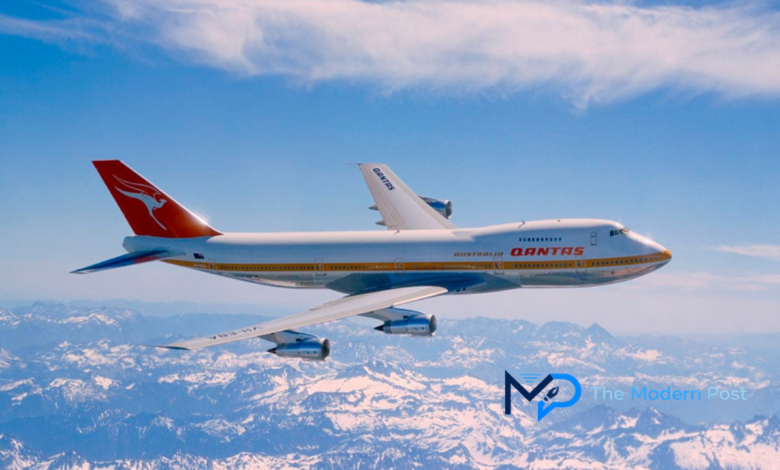
The Boeing 747-400 City of Canberra
The aircraft selected for this historic journey was Boeing 747-400 VH-OJA, named City of Canberra. It was particularly significant because it was Qantas’ first 747-400. The aircraft represented an important step forward for the airline, combining the familiar size and presence of the 747 with technological improvements designed to make long-distance operations more efficient and capable.
VH-OJA became permanently associated with the remarkable London–Sydney journey. Its performance demonstrated how modernised versions of the 747 could extend the boundaries of long-haul flying. The aircraft subsequently enjoyed a long career with Qantas, giving it a history that went far beyond its famous flight. Eventually, its preservation ensured that the aircraft itself would remain part of Australia’s aviation heritage.
London to Sydney Route, Distance and Flight Time
The 747’s London to Sydney non-stop flight covered approximately 18,001 kilometres, connecting London Heathrow Airport with Sydney Airport. This immense distance was one of the defining features of the journey. Completing it without a scheduled fuel stop was particularly impressive in 1989, when aircraft technology had not yet reached the capabilities available on many of today’s longest commercial routes.
The flight took approximately 20 hours and 9 minutes. Such a long period in the air required careful monitoring of fuel, weather and aircraft performance. Winds could significantly affect fuel consumption, while the aircraft’s weight had to be managed carefully. Every element of the operation therefore contributed to the success of the journey, from the initial preparation at Heathrow to the final arrival in Sydney.
How the Boeing 747 Managed the Extraordinary Journey
Fuel was one of the most important considerations behind the flight. VH-OJA was prepared with a very large fuel load, allowing it to remain airborne for the exceptionally long journey. However, carrying additional fuel also increases aircraft weight, creating a delicate balance. To overcome this challenge, Qantas operated the aircraft with an unusually light payload compared with a conventional commercial flight.
The aircraft’s Boeing 747-400 design also played a crucial role. Improvements to the engines and aerodynamics helped provide better efficiency and greater range. The experienced Qantas flight crew had to carefully manage the aircraft throughout the journey, paying close attention to fuel consumption and changing conditions. The achievement was therefore not simply a matter of filling the tanks; it required detailed planning and skilled operational management.
What Happened During the 20-Hour Journey
The special flight departed London Heathrow and began its remarkable journey towards Australia. For the crew, remaining airborne for roughly 20 hours meant maintaining concentration over an unusually long period. Fuel planning, weather information and aircraft performance were continually important considerations. With no conventional refuelling stop available, the crew had to make the most of the aircraft’s available range.
The aircraft did not carry a normal load of commercial passengers and cargo. Instead, only a small group of people were aboard, including Qantas pilots and other personnel associated with the special flight. Keeping the aircraft light allowed a greater proportion of its weight capacity to be dedicated to fuel. The successful arrival in Sydney demonstrated that the carefully prepared Boeing 747-400 had achieved its ambitious objective.
Was It a Normal Commercial Passenger Service?
It is important to distinguish the historic flight from a regular scheduled passenger service. The 747’s London to Sydney non-stop flight was a special delivery and demonstration journey rather than a standard Qantas service carrying a full complement of passengers, luggage and commercial cargo. This distinction explains how the aircraft could achieve such an extraordinary range under specially optimised operating conditions.
The flight was designed to showcase what the Boeing 747-400 could accomplish when range was prioritised. A normal airline service would have to balance fuel with passengers, baggage, cargo and other operational requirements. By reducing the payload substantially, Qantas created conditions that allowed VH-OJA to undertake the exceptional journey. Nevertheless, the achievement remained an important demonstration of the aircraft’s capabilities.
Why the Flight Mattered to Aviation
The significance of the flight extended beyond Qantas itself. It provided a dramatic demonstration of how improvements in aircraft technology were expanding the possibilities of international travel. A journey between London and Sydney without a fuel stop had been a formidable technical challenge, yet the Boeing 747-400 successfully completed it. The flight therefore became an important example of the progress being made in long-range aviation.
For Qantas, the journey also reinforced its reputation as an airline experienced in operating very long international routes. The Boeing 747 had already become an icon of global travel, but VH-OJA showed that its latest generation could achieve even more. The flight captured the imagination because it combined an instantly recognisable aircraft with a distance that seemed almost unimaginable for a non-stop journey at the time.
The Legacy of the London to Sydney Record
The 747’s London to Sydney non-stop flight became an enduring part of Qantas history. Its approximately 18,001-kilometre journey and roughly 20-hour flight time represented an extraordinary achievement for the late 1980s. The record demonstrated that carefully prepared aircraft could travel immense distances without relying on the conventional fuel stops associated with many long-haul routes of that era.
The legacy of the journey became even more interesting as aircraft technology continued to develop. Modern aeroplanes can now operate extremely long commercial routes with passengers on board, something that makes the specially configured 1989 flight particularly valuable as a historical benchmark. It illustrates how aviation progressed from experimental or demonstration-style ultra-long-haul journeys towards increasingly practical direct international services.
From the Boeing 747 to Modern Ultra-Long-Haul Travel
Modern long-haul aircraft benefit from decades of technological development. More efficient engines, improved aerodynamics, lighter materials and sophisticated flight systems have made it possible to travel huge distances while carrying substantial passenger loads. The contrast with the 1989 Qantas flight is striking because VH-OJA needed a specially reduced payload to maximise its range.
The historic flight also provides useful context for the development of modern direct Australia–Europe services. Today’s ultra-long-haul aircraft are specifically designed to operate commercially over enormous distances. Rather than being a one-off demonstration of what an aircraft might achieve, these services are designed around passenger comfort, operational efficiency and regular airline schedules, reflecting how far aviation has progressed since 1989.
What Happened to VH-OJA City of Canberra?
After completing its historic journey, VH-OJA continued operating with Qantas for many years. The aircraft became part of the airline’s long-serving Boeing 747 fleet and carried passengers on numerous international routes. Its lengthy operational career added another dimension to its history, as the aircraft was able to serve the airline well beyond its original demonstration flight.
VH-OJA was eventually retired from airline service and preserved at the HARS Aviation Museum in New South Wales. Its survival is particularly significant because it allows visitors to see the aircraft connected with one of the most famous long-distance flights in Qantas history. The preserved 747 provides a tangible reminder of the engineering ambition and careful preparation behind its London–Sydney achievement.
Key Facts About the Historic Flight

The 747’s London to Sydney non-stop flight involved Qantas Boeing 747-400 VH-OJA, known as City of Canberra. The aircraft travelled from London Heathrow to Sydney, covering approximately 18,001 kilometres in around 20 hours and 9 minutes. The journey took place in August 1989 and was arranged as a special flight to demonstrate the aircraft’s exceptional long-range capability.
The aircraft’s operating conditions were very different from those of an ordinary passenger service. VH-OJA carried a limited number of people and was loaded with a substantial quantity of fuel. Its reduced payload was an essential part of the strategy for achieving the enormous distance. These details help explain why the flight was possible and why it remains an important aviation milestone.
Why the Flight Still Fascinates Aviation Enthusiasts
The story continues to attract attention because it combines several elements that make aviation history compelling. There is the iconic Boeing 747, the immense distance between Britain and Australia, the challenge of remaining airborne for approximately 20 hours and the technical achievement of reaching Sydney without a fuel stop. Together, these details create a story that remains memorable decades later.
The flight also represents the spirit of innovation that has shaped commercial aviation. Aircraft designers and airlines have continually searched for ways to fly further, more efficiently and more reliably. The 1989 Qantas journey demonstrated what was possible with the technology of its time, while today’s aircraft continue to push those boundaries. For that reason, the flight remains more than a historical curiosity.
Conclusion
The 747’s London to Sydney non-stop flight was a remarkable demonstration of long-range aviation capability. Qantas Boeing 747-400 VH-OJA, City of Canberra, travelled approximately 18,001 kilometres from London Heathrow to Sydney in around 20 hours and 9 minutes. The specially prepared aircraft achieved this extraordinary journey without a fuel stop, creating an enduring milestone in aviation history.
Although it was not a normal commercial passenger service, the achievement demonstrated the impressive potential of the Boeing 747-400. It also offered a glimpse of the future of ultra-long-haul travel, which has since advanced through better aircraft, engines and operating techniques. With VH-OJA now preserved, the story of this extraordinary London–Sydney journey continues to inspire aviation enthusiasts around the world.
Frequently Asked Questions
What was the 747’s London to Sydney non-stop flight?
The flight was a special Qantas demonstration and delivery journey in 1989 using Boeing 747-400 VH-OJA, City of Canberra. It travelled from London Heathrow to Sydney without a fuel stop.
When did the Qantas 747 fly non-stop from London to Sydney?
The historic journey took place on 16–17 August 1989. It became famous for demonstrating that a Boeing 747-400 could cover the enormous distance between Britain and Australia without refuelling.
How long did the London to Sydney 747 flight take?
The flight took approximately 20 hours and 9 minutes. Its unusually long duration reflected the enormous distance and the special operating conditions used to maximise the aircraft’s range.
How far did the Qantas 747 fly from London to Sydney?
The aircraft covered approximately 18,001 kilometres between London Heathrow and Sydney Airport, making it an extraordinary long-distance flight for its era.
Which Boeing 747 flew non-stop from London to Sydney?
The aircraft was Qantas Boeing 747-400 VH-OJA, named City of Canberra. It was Qantas’ first Boeing 747-400 and later became one of the airline’s most historically significant aircraft.
Was the 1989 London to Sydney 747 flight a normal passenger service?
No. It was a special delivery and demonstration flight rather than a regular scheduled passenger service. The aircraft operated with a greatly reduced payload to maximise its range.
How did the Boeing 747 manage such a long non-stop flight?
The aircraft carried a substantial fuel load while operating with a very light payload. Its improved Boeing 747-400 engines and aerodynamics, combined with detailed planning and experienced pilots, helped make the journey possible.
Where is the Qantas 747 that flew from London to Sydney now?
VH-OJA, City of Canberra, has been preserved at the HARS Aviation Museum in New South Wales. Its preservation allows visitors to see the aircraft associated with the historic journey.
Did Qantas regularly operate this exact non-stop 747 service?
No. The 1989 journey was a specially arranged flight rather than a regular scheduled Qantas passenger route. Its purpose was to demonstrate the capabilities of the new Boeing 747-400.
Is there a non-stop London to Sydney flight today?
Modern aircraft have made ultra-long-haul commercial routes increasingly practical. Today’s direct Australia–Europe services use newer aircraft and operating techniques that differ significantly from the specially configured 747 demonstration flight.
Also Read: chalton street london